

Author’s note: this is a repost of my most read article of all time. As of 2020 the post had received more than half a million views and shares at my old Patheos blog. I’m reposting here for the convenience of my davidmurrow.com readership
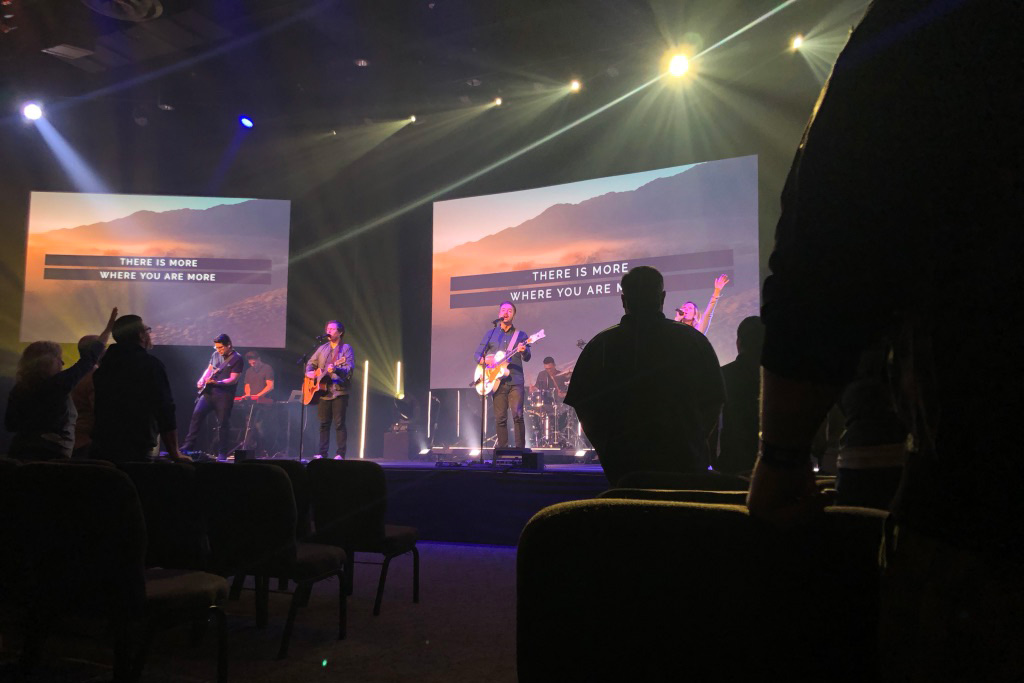
It happened again yesterday. I was attending one of those hip, contemporary churches — and almost no one sang. Worshippers stood obediently as the band rocked out, the smoke machine belched and lights flashed. Lyrics were projected on the screen, but almost no one sang them. A few women were trying, but I saw only one male (other than the worship leader) making the attempt.
A few months ago I blogged, “Have Christians Stopped Singing?” I did some research, and learned that congregational singing has ebbed and flowed over the centuries. It reached a high tide when I was a young man – but that tide may be going out again. And that could be bad news for men.
First, a very quick history of congregational singing.
Before the Reformation, laypersons were not allowed to sing in church. They were expected to stand mute as sacred music was performed by professionals (priests and cantors), played on complex instruments (pipe organs), and sung in an obscure language (Latin).
Reformers gave worship back to the people in the form of congregational singing. They composed simple tunes that were easy to sing, and mated them with theologically rich lyrics. Since most people were illiterate in the 16th century, singing became an effective form of catechism. Congregants learned about God as they sang about God.
A technological advance – the printing press – led to an explosion of congregational singing. The first hymnal was printed in 1532, and soon a few dozen hymns became standards across Christendom. Hymnals slowly grew over the next four centuries. By the mid 20th century every Protestant church had a hymnal of about 1000 songs, 250 of which were regularly sung. In the church of my youth, everyone picked up a hymnal and sang every verse of every song.
About 30 years ago a new technological advance – the computer controlled projection screen – entered America’s sanctuaries. Suddenly churches could project song lyrics for all to see. Hymnals became obsolete. No longer were Christians limited to 1,000 songs handed down by our elders.
At first, churches simply projected the songs everyone knew – hymns and a few simple praise songs that had come out of the Jesus Movement. People sang robustly.
But that began to change about fifteen years ago. Worship leaders realized they could project anything on that screen. So they brought in new songs each week. They drew from the radio, the Internet, and Worship conferences. Some began composing their own songs, performing them during worship, and streaming them online.
In short order we went from 250 songs everyone knows to 250,000+ songs nobody knows.
When it comes to music the church has returned to the 14th century. Worshippers stand mute as professional-caliber musicians play complex instruments, sung in an obscure language. Martin Luther is turning over in his grave.
What does this mean for men? On the positive side, men no longer feel pressure to sing in church. Men who are poor readers or poor singers no longer have to fumble through hymnals, sing archaic lyrics or read a musical staff.
But the negatives are huge. Men are doers, and singing was one of the things we used to do together in church. It was a chance to participate. Now, with congregational singing going away, and communion no longer a weekly ordinance, there’s only one avenue left for men to participate in the service – the offering. Is this really the message we want to send to men? Sit there, be quiet, and enjoy the show. And don’t forget to give us money.
There’s nothing wrong with professionalism and quality in church music. The problem isn’t really the rock band, or the lights, or even the artificial smoke. What we’ve lost is familiarity. People enjoy singing songs they know.
How do I know? When that super-hip band performed a hymn, the crowd responded with gusto. People sang. Even the men.
David Murrow, The Online Preaching Coach, is the author of Why Men Hate Going to Church and many other bestselling books. David is an award winning television producer whose work has been seen on ABC, NBC, PBS, CBS, Discovery Networks, BBC World Service and dozens more. He trains pastors how to make their sermons more watchable, memorable and shareable online.
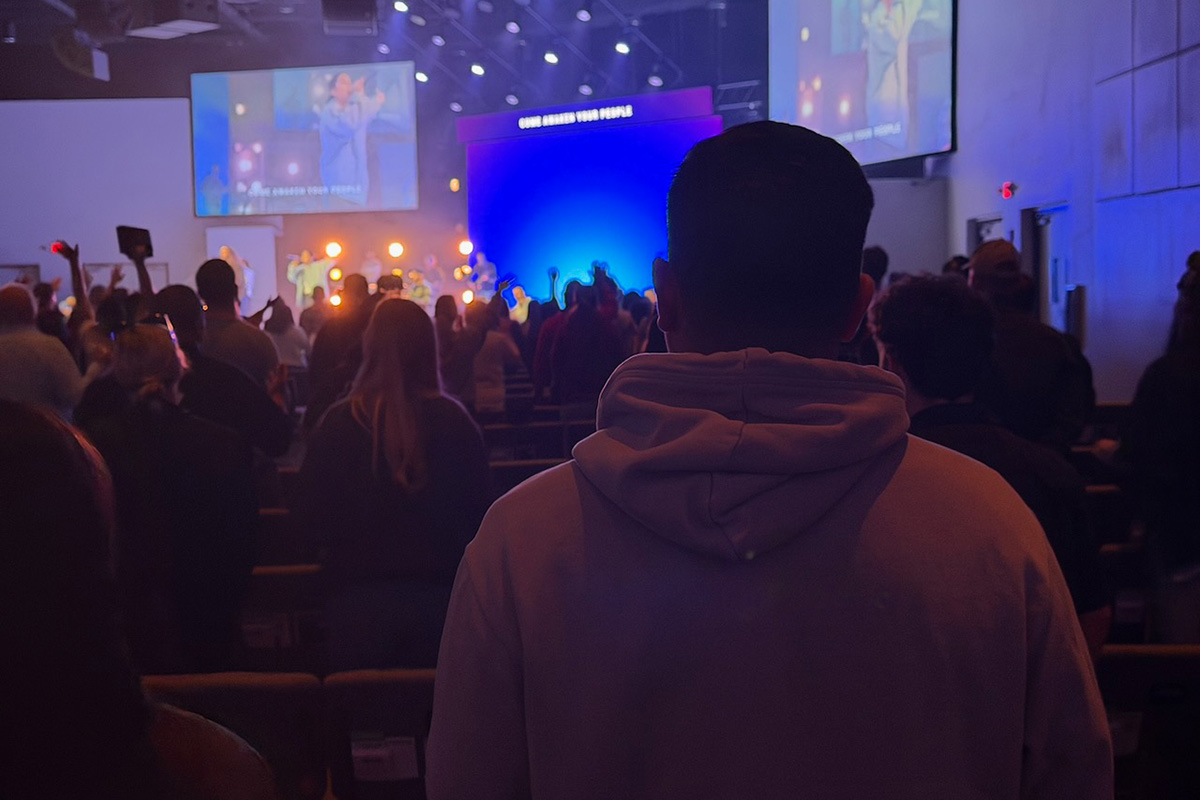



Where can we go to worship in spirit and truth where what you hear in singing praises to God is the voices of fellow worshipers (even if not perfect) rather than LOUD rock band type concert instruments and camera shots of the performers?
Right on. We need participation by all in worship. Blending of the old and new songs is critical in my opinion.
i am in a health recovery facility where the name of Christ is never mentioned except in anger. but each day my memory provides another hymn that reminds me of God’s goodness and care
I think one of the reasons that men aren’t singing in church is that the bass guitar has taken the place of low male voices so bass and baritone voices are rarely ever represented in the modern worship band.
Worship leaders are almost always tenors or female voices. This places most worship songs in a key that leaves men with lower voices no comfortable place to sing. If they try to sing along with the melody, they will inevitably have to pop up or down the octave at some point in the song.
With no one singing their voice part on stage, and not being able to sing comfortably along with the lead nor the harmony voices, many men don’t sing—they may even believe they’re bad singers.
This negative experience for Bases and Baritones is very different than what they experienced in the way that hymns were written. The root of every cord was sung by men with bass/baritone voices—giving a large number of men a crucial role in forming the fundamental of each chord in every hymn. They had a part to sing. Their part was, important, powerful, comfortable in their vocal range and tailor-made for them.
That’s why men will sing along when hymns are played—because the chord structure gives them a part to sing so that they can participate.
Its been my experience that Praise and worship is a gift from God ,from Heaven, delivered by The Holy Spirit ,through humans, then returned to its rightful place. When we worship verbally,we get an opportunity to hear our deepest longings and cries, maybe for the first time. Then God inhabits our praises, and we begin the process of releasing control.
Worship music CAN BE a lump to deal with when having a mixed age congregation. Sadly, It has caused splits in churches. There should be a theme in the music that does support the Pastor’s message…..and seemingly EVERY instrument is okay except those nefarious drums. Lol…we won’t have to deal with this when we are collected around the throne of God worshipping Christ in heaven. Give us patience, Lord, while we wait on You.