

Meet Trevor — a twenty-something seeker
Trevor was raised in a traditional church but quit during his early teens.
Men like Trevor are returning to church by the millions.
He asks his phone, “Where should I go to church?” A website pops up immediately: a large church not far from his apartment. He’s heard good things about this church from a couple of women at work.
Sunday morning Trevor hops into his car and drives to the church. He finds it easily, thanks to abundant signage. Friendly men guide him to an empty spot.
He walks in and sees lots of folks chatting. He likes the coffee shop vibe of the lobby – very different than the church he grew up in. He spots a check in area for children (not a need for him, yet.)
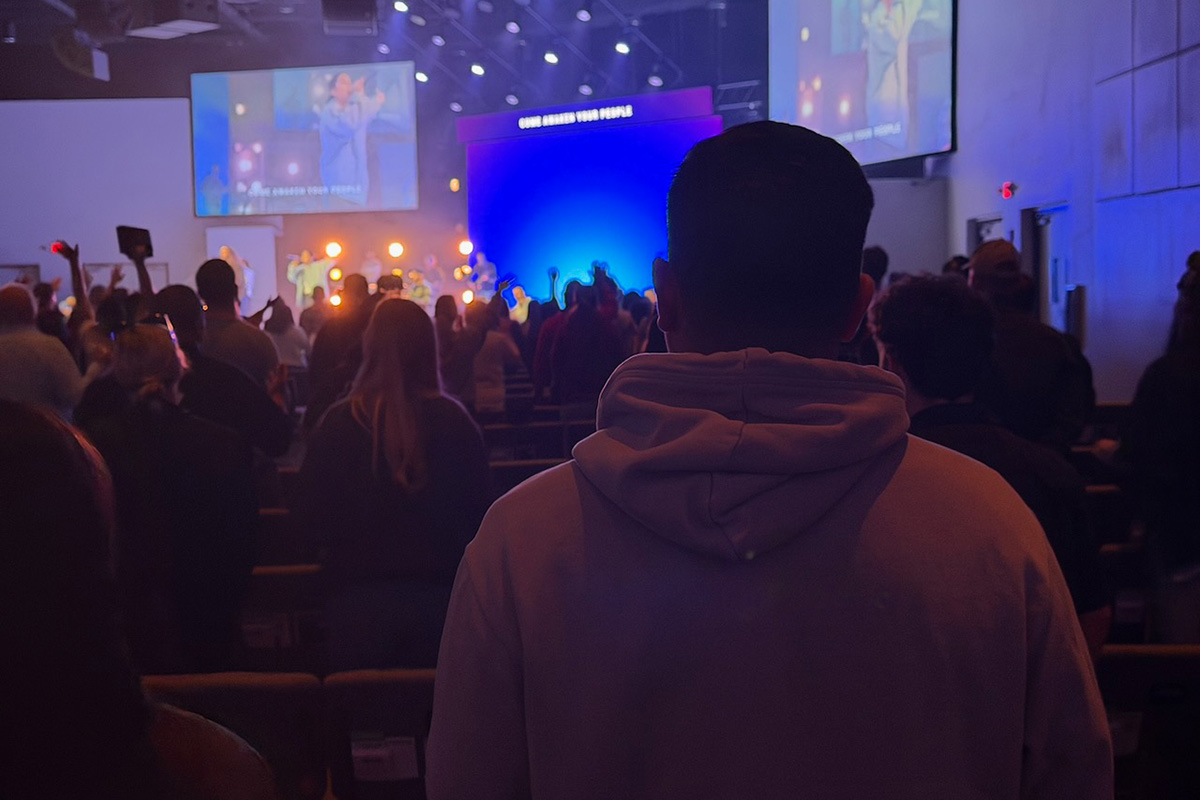
A smiling woman welcomes Trevor into a darkened, windowless room with two huge screens projecting time-bomb style countdowns. There’s an elevated stage beneath a shiny aluminum lighting truss. The air is full of artificial smoke, reminding Trevor of a rock concert he once attended (that smoke was real, and it made him slightly high).
The clock strikes zero…
A young man with a guitar takes the stage, with a band alongside him. “Welcome to _________church. Let’s lift up the name above all names!” he cries.
As he strums his first note people all over the sparsely populated auditorium begin to stand. So Trevor stands. He’s never heard the song they’re playing.
Trevor looks around. Lyrics appear on the screen, but hardly anybody is singing them. A few women have their hands in the air, swaying to the music. But no man around Trevor is even making the attempt. Instead, most of the men stare blankly at the stage, hands in pockets, while the band rocks out. A man down the row is checking something on his iPhone.
Then the band plays a second song he’s never heard. Then a third. The folks up front sing robustly, but not the men.
Finally the band stops, except the keyboardist, who plays quietly under the opening prayer, which is delivered by a smiling, muscular man covered in tattoos. The prayer is brief – 20 seconds long, and ends with a handclap and a loud AMEN! The tattooed man invites the congregation to take their seats, introduces himself and welcomes the visitors. After a couple of announcements the band fires up another song. Immediately the crowd begins rising to its feet. So does Trevor — reluctantly.
The band plays two more songs Trevor has never heard. Trevor checks his watch: he’s been here almost 25 minutes and all he’s done is stand in the dark listening as a band plays songs nobody seems to know.
The whole thing feels like a show to him. Like canned entertainment. So he slips out the back door and decides not to come back.
The first 30 minutes: nothing for seekers
Church growth experts tell us that visitors decide in the first 10 minutes whether or not they will return. Entire books have been written to help churches with their “front door” experience. Consultants emphasize easy parking, friendly greeters and a seamless check-in for kids’ church.
But nobody’s addressing the elephant in the room: the uncomfortable situation we create for visitors by front-loading our worship services with songs they’ve never heard.
Longtime churchgoers really dig this vibe, but we’re achieving it at the expense of the newbies. Visiting men ask themselves:
- “How long will this music go on?”
- “Are we going to have to stand the whole time?”
- “How long until the service is over?”
Let me give it to you straight: most seekers could not care less about worship music. They are not coming to hear your band. (According to a Gallup poll, neither are most of your members)
Start your service with a roadmap
Instead of starting with music, start your worship service with a road map. Like this.
“Welcome to _______church. I’m Pastor Jamie, and we’re glad you’re here. Show of hands: In the past, how many of you have said something and later regretted it? Like, really messed things up?
(People raise hands)
“This is an ancient problem that shows up in the Bible. In a few minutes I’ll be teaching from the New Testament book of James. My message is called: How to keep your tongue under control. I’m going to teach you three specific skills that will help you say what you mean without being mean. But before I teach, here’s our road map:
- We’re going to sing 2 songs of praise to God
- We’ll have some announcements
- And then one more song you’ll probably recognize. It’s been sung by millions of Christians over the centuries.
- Then I’ll teach you how to keep your tongue in check. Something I need to learn as well.
- When I’m done teaching, I’ll give you something you can share with your kids and neighbors. And we’ll dismiss.
Now, let’s welcome Malcolm and our music team.
Roadmap? This may seem odd to you. But churches used to do this all the time. It was called an order of worship printed in a bulletin. It allowed visitors to see what was coming next, so they didn’t feel like outsiders.
Put your roadmap up on the screen as you go through it. Men will appreciate it.
Here are three more tips:
- Restrict your worship sets to a maximum of 2 consecutive songs. Singing is good. Making visitors stand for 15 minutes without a break is not.
- Set clear time expectations, like this: “We should be dismissed by about noon, so thanks for being here.”
- Ask the congregation to sit or stand in unison. This was standard practice in all of Christendom until about 20 years ago, when churchgoers suddenly decided that standing during every verse of every song is mandatory. Unison worship reflects the bond we share in Christ. And it will give visitors comfort – helping them know what to do.
Give them something of value as soon as they arrive
Young men are coming back to church. They are seeking two things: community and coaching. Let them know right away what they’re going to take home with them. Don’t make them wait – or they might sneak out the back.
The next time you plan your order of worship, plan with Trevor in mind.
David Murrow, The Online Preaching Coach, is the author of Why Men Hate Going to Church and many other bestselling books. David is an award winning television producer whose work has been seen on ABC, NBC, PBS, CBS, Discovery Networks, BBC World Service and dozens more. He trains pastors how to make their sermons more watchable, memorable and shareable online.


I can identify with this . In uk also